0 comments

2nd A, B, C Splitting class: Writing


Molt important! Llegeix TOT el que he escrit abans de demanar el que has de fer!


Today you are going to write a COMPOSITION about your favourite band.


You have to...:

1. go to google images and look for a photo of your favourite band (not pop star)

2. copy and paste the photo in an open office document

3. write the composition (you have an example of a letter at the Student's book page 23. Read the text and do the same with your favourite band) - USE YOUR BOOK AS A GUIDE!!!!

4. VERY IMPORTANT - Elements of the letter:

a) 100 -120 words
b) use paragraphs
c) use Present Continuous
d) write about each member (instrument, clothes, hobby)

5. Save the composition in your personal file.


ATTENTION 2B & C !!!!!!


Here you have the contents for the exam:

-Vocabulary (instruments & musicians, Joe's world and clothes, dialogue and text "My favourite band")

-Present continuous (affirmative, negative and interrogative)

-one Present simple question (Unit 1)

-Can / can't

-Dialogue

-Listening

-Reading

-Writing

(and next splitting class: oral exam)

GOOD LUCK!!!!!!!!
read more
0 comments

1A and B Splitting class

Let's practise Unit 2!

A) Remember the Present Simple!

I drink
You drink

He drinks
She drink
s
It drink
s

We drink
You drink
They drink

Fixa't com el verb no canvia a excepció de la 3ª persona del singular (he / she / it) on s'afegeix una...


IMPORTANT! Escriu les tres primeres frases al quadern!!!! Practise the Present Simple affirmative AQUÍ i AQUÍ.


B)
It's time to PLAY!

1.Revise Unit 2 vocabulary. Do game 1 (wordsearch). Click here Unit 2 (Spotlight)

2.Days of the week!
Click AQUÍ.


3. THE TIME! Practise here: AQUÍ.

4. READ the ordinal numbers and COPY them on the notebook.

ATTENTION! Exercises 4 & 5 are very important to play activity number 6!

1 - First
2 - Second
3 - Third
4 - Fourth
5 - Fifth
6 - Sixth
7 - Seventh
8 - Eighth
9 - Ninth
10 - Tenth
11 - Eleventh
12 - Twelfth

5. READ and remember the months of the year.

6.Hunting the months! Click here: AQUÍ.

read more
0 comments

2 A, B & C Splitting class

Good morning!

Here you have the activities for today:

1. Practise PRESENT CONTINUOUS

Do exercises 1, 2, 3, 4, 5,6, 7, 8.

2. Practise CAN / CAN'T

Do exercises 1, 2, 3, 4.


3. PLAY a little bit!

Do games 1 & 3. Click this Unit 2 (Spotlight)

4. Watch & listen this video ONLY with HEADPHONES!!! (auriculars)


5. Look at the Barack Obama's video: YES, WE CAN!
(with HEADPHONES!!!)


read more
6 comments

The origins of Halloween

Com veis el text d'avui està en català ja que vull que conegueu a la perfecció la història de Halloween i sapigueu una mica més sobre els celtes. Al final del text trobareu preguntes sobre aquest.

La història de Halloween

Molta gent pensa que Halloween és originària dels Estats Units però això no és així. Els orígens d'aquesta festa es troben a Irlanda, a la Irlanda celta, i s'originà uns 2000 anys a.C.
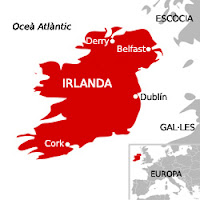
En aquell temps els Celtes vivien a Irlanda, Gran Bretanya i nord de França. La seva vida es concentrava en conrear la terra per obtenir aliment per tal de sobreviure i defensar-se contra les invasions que aquestes regions sofrien.

Si pensam en el clima d'Irlanda i Gran Bretanya sabem que els hiverns son freds i molt humits. Així, fa 4000 anys la millor època era la primavera i l'estiu on la terra dona la majoria de fruits i és quan el clima és més benèvol. De fet, d'aquí venen els colors típics de Halloween: el taronja que simbolitza la collita, ja que és el color del blat i el negre que simbolitza la foscor i sofriment de l'hivern.

L'hivern per aquella gent era una època molt i molt dura: hi havia pocs aliments i poques hores de claror, feia fred, plovia molt i per tant la fam, les malalties i la majoria de morts estaven a l'ordre del dia. Els celtes temien l'hivern ja que era una època molt dura i duia sofriment.

L'octubre era el darrer més on es duien a terme les darreres collites i per tant eren les darreres setmanes d'abastir aliment. El novembre ja feia fred i començava el dur hivern. Així, els celtes veien el 1 de novembre com l'inici del sofriment, de la fam i del fred.

Per ells al novembre començava un altre any, la collita ja havia finalitzat i començava una altra estació i dia 31 d'octubre venia a ser el nostre “Cap d'Any”. Aquesta festa es deia Samhain (pronunciat /sou-in/) i el nom prové del nom que rebia el Deu de la Mort o obscuritat dels Celtes. La celebració la realitzaven els Druides (capellans, erudits, mags i filòsofs celtes). Els celtes pensaven que la nit on acabava l'època de collita i començava l'hivern els mons dels vius i dels morts es trobaven més aprop que mai i creien que amb l'arribada de l'hivern, aquesta nit del 31 d'octubre els fantasmes dels morts baixaven a la terra.

La gent tenia molta de por a trobar-se aquests fantasmes pel carrer durant la nit del 31 i es posaven màscares (sovint caps de qualque animal) perquè els fantasmes no els reconeguessin i passessin de llarg. I d'aquí ve la tradició de disfressar-se per Halloween. Com que aquesta festa encara manté la “por” i temor que passaven els celtes, la gent ara es disfressa de personatges que fan por tal com fantasmes, frankesteins, bruixes, etc.

Llavors, cap a l'any 43 DC els Romans arribaren a les terres celtes. Aquests anaren conquerint les seves terres i cap al segle VII els romans varen “cristianitzar” la tradició pagana dels Celtes. I convertiren la tradició celta en el nostre Tot Sants. En aquella època Tot Sants (All Saints Day en anglès) es deia Alholowmesse, llavors passà a All-hallows, evolucionà i d'aquí ve el nom actual anglès de Halloween.

Contesta les següent preguntes. Pots contestar al quadern o al oppen office i guardar-ho a la teva carpeta.

A) On i quan s'originà la tradició de Halloween?

B) A quines regions, entre d'altres, varen viure els celtes?

C) Quines dues prioritats tenien els celtes en el seu dia a dia?

D) Què simbolitzen els dos colors de Halloween?

E) Quines dificultats havien de passar els celtes durant l'hivern?

F) Quin era el darrer mes de la collita? Quan començava l'hivern pels celtes?

G) Quan celebraven "Cap d'Any" els celtes? Com es deia aquesta festa? Qui la celebrava?

H) Qui eren els "Druides"?

I) Els celtes què creien que passava el dia 31 d'octubre?

J) D'on ve la tradició de disfressar-se per Halloween?

K) Quan varen arribar els Romans als territoris celtes?

L) Què varen fer els Romans al segle VII?

read more
0 comments

Splitting class: 2nd of ESO A, B, C

Recorda que has de llegir MOLT BÉ el que has de fer.

TASKS FOR TODAY:

-you have to finish the text about "La història de Halloween".
1.
Click HERE


-learn the new verbal tense: Present Continuous


2. READ & Remember how to form the PRESENT CONTINUOUS.

Positive Negative Question
  • I am speaking.
  • You are speaking.
  • We are speaking.
  • They are speaking.
  • He is speaking.
  • She is speaking.
  • It is speaking.
  • I am not speaking.
  • You are not speaking.
  • We are not speaking.
  • They are not speaking.
  • He is not speaking.
  • She is not speaking.
  • It is not speaking.
  • Am I speaking?
  • Are you speaking?
  • Are we speaking?
  • Are they speaking?
  • Is he speaking?
  • Is she speaking?
  • Is it speaking?


3
. Recorda que quan afegim el -ING els verbs poden sofrir canvis.
Llegeix atentament el següent requadre per recorda-los.


Verb ending in... How to make the -ING form Examples
one vowel + one consonant

CVC
Double the consonant swim - swimming
hit - hitting
get - getting
- e
Remove E, then add -ING come - coming
lose - losing
live - living
- y
+ ING say - saying
study- studying
play - playing

Atenció! Dels següents exercicis has de copiar les tres primeres frases al quadern o a un document open office (i guardar-ho a la teva carpeta). La resta ho pots fer online.

4.
Practise the Present Continuous affirmative HERE and HERE.

5. Practise the Present Continuous negative HERE and HERE.

6. Practise the Present Continuous interrogative HERE and HERE.

ATTENTION 2B!

Here you have the homework corrections:

Student's book page 20

2.1-is playing
2.2-are wearing
2.3-is dancing
2.4-am having
2.5-are winning

3.
1-isn't playing
3.2-aren'te wearing
3.3-isn't dancing
3.4-am not having
3.5-aren't winning

4.1-Is she swimming? Yes, she is
4.2-Is she having dinner? Yes, she is
4.3-Is he getting dressed? No, he isn´t
4.4-Is she wearing a dress? No, she isn´t
4.5-Is he playing the violin? Yes, he is

5.1-isn't raining
5.2-am sitting
5.3-aren't listening
5.4-are waiting
5.5-Are you having ...?
5.6-are you doing?
5.7-Is your cousin visiting...?
5.8-is coming

Workbook corrections, page 14

1.1-is writing
1.2-is practising
1.3-is sitting
1.4-is wearing
1.5-is watching
1.6-is getting

2.1-they are not dancing
2.2-he isn´t doing...
2.3-I'm not waiting...
2.4-it isn't raining
2.5-you aren't having fun
2.6-we aren't chatting
2.7-she isn't listening

3.1-What is Laura doing? She is reading a book
3.2-Who is sitting next to Laura? David is sitting next to Laura
3.3-Is Mark reading a book? No, he is listening to music
3.4-What are James and Sara doing? They are reading
3.5-Who is buying a ticket? Kate is buying a ticket
3.6-Are David and Tina having luch? Yes, they are

HERE, you have the new vocabulary from pages 18 and 19 (Student´s book):

tonight- avui vespre
let's go- anem
early- prest
arrive- arribar
take- agafar
to get dressed- vestir-se
she looks fantastic- ella està guapíssima
to have fun- passar-ho bé
over there- per allà


read more